
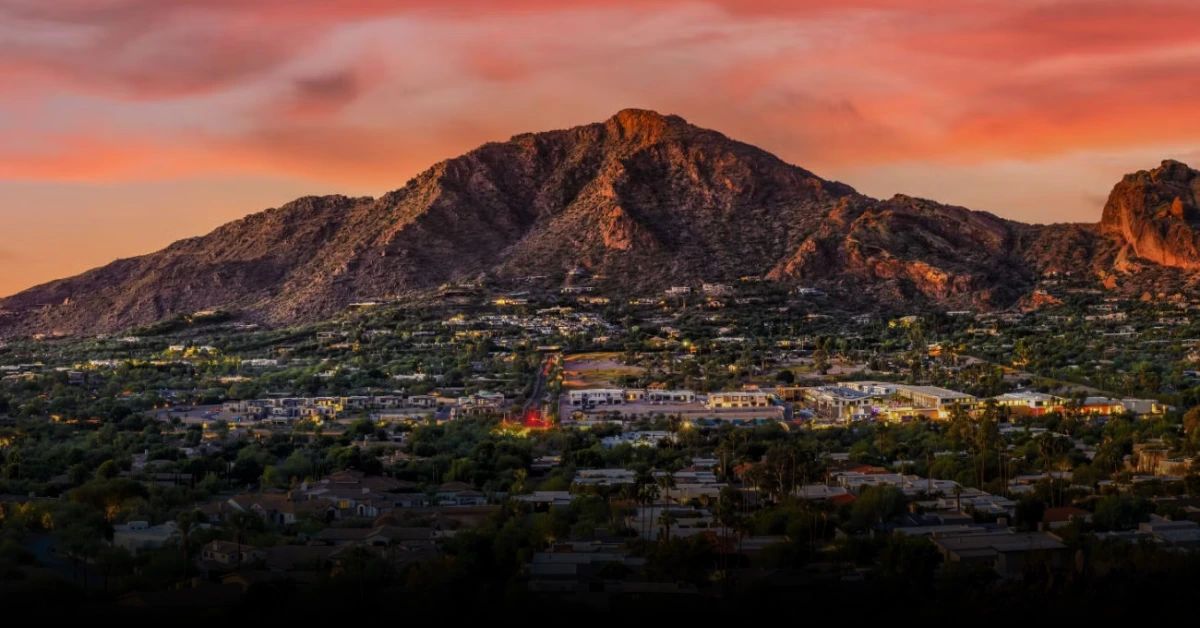
Camelback Mountain isn’t just another hike in Phoenix—it’s the hike. Rising nearly 2,700 feet above the city, it’s one of the Valley’s most iconic outdoor adventures.
Whether you’re a seasoned hiker looking for a challenge or a traveler chasing that postcard-perfect desert view, this mountain has it all.
Table of Contents
Getting to Camelback Mountain
Camelback Mountain is located right in the heart of Phoenix, surrounded by upscale resorts, desert landscapes, and busy city streets.
Because of its central location, it’s incredibly popular—and yes, that means parking is a challenge.
- Echo Canyon Trailhead: Parking lot fills up quickly, often before sunrise.
- Cholla Trailhead: Street parking along residential areas, with some restrictions.
Trailhead Facilities: The Echo Canyon Trailhead has restrooms, water fountains, and shaded picnic areas, while Cholla Trailhead has no facilities at all. Parking is free at both access points, but space is limited.
Pro Tip: Arrive before 6 a.m. if you want a parking spot without stress, especially during spring and fall weekends. Rideshares like Uber or Lyft are a smart alternative if you don’t want to circle endlessly for a space.
The Two Main Trails to the Summit
Echo Canyon Trail
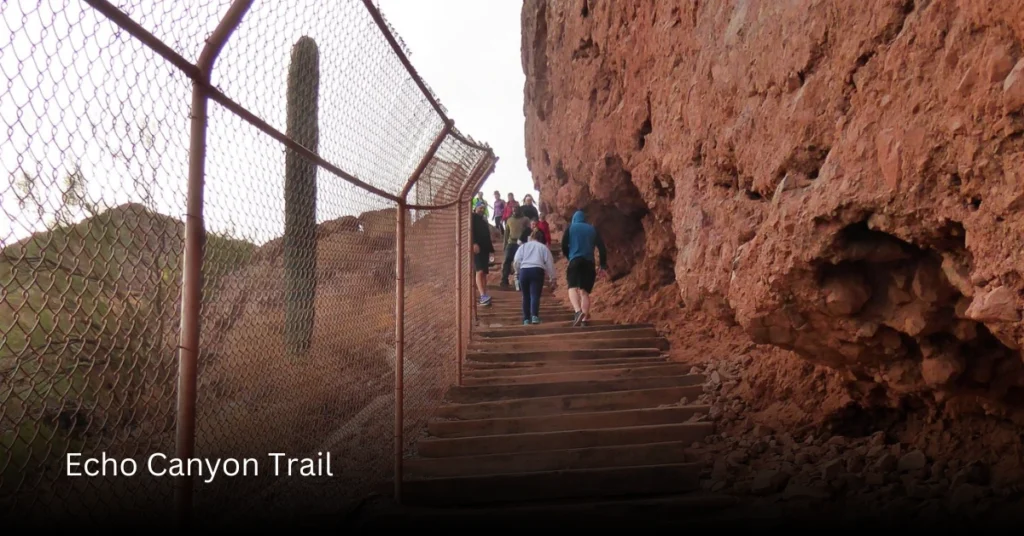
The Echo Canyon Trail is the most famous—and the most demanding. At just 1.2 miles one way, it might look short on paper, but don’t be fooled.
- Difficulty Rating: Strenuous. This trail is best for experienced hikers who don’t mind steep climbs.
But the reward? Sweeping views of Phoenix, Scottsdale, and the McDowell Mountains.
This trail is popular with locals training for endurance events as well as adventurous travelers who want a brag-worthy climb.
Cholla Trail
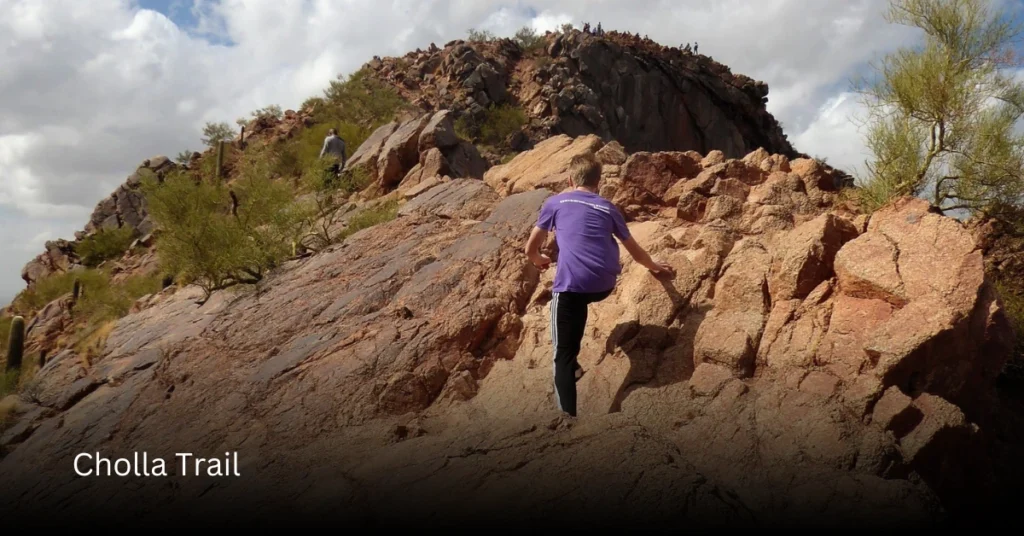
On the opposite side of the mountain, the Cholla Trail offers a slightly longer route at around 1.4 miles one way.
It starts with a gentle incline through desert terrain before turning into a rocky, narrow ridgeline climb.
The final section is exposed, so you’ll need good balance and sturdy shoes.
- Difficulty Rating: Moderate-to-Strenuous. Easier at the beginning but challenging toward the top.
Cholla is often considered “slightly easier” at the start but equally tough at the end.
It’s less crowded than Echo Canyon, but parking here is more limited since it’s tucked into a residential neighborhood.
What to Expect on the Hike
Both trails involve steep inclines, loose gravel, and a total elevation gain of about 1,200 feet. Depending on your pace, it can take anywhere from 1.5 to 3 hours for a round trip.
Permits & Fees: Hiking Camelback Mountain is completely free. No entry permits are required, and parking at both trailheads is also free—though limited.
Along the way, you’ll spot saguaros, prickly pears, and desert wildflowers in spring.
If you’re lucky, you might catch sight of a Gambel’s quail, desert cottontail, or even a Harris’s hawk gliding overhead.
Essential Tips for Hikers
- Best Time to Hike: November to March for cooler weather. Summers can be dangerously hot, with trail closures during extreme heat.
- Gear Up: Bring at least 2 liters of water per person, wear trail shoes with good grip, and carry a hat and sunscreen.
- Know Your Limits: More than 200 rescues happen here each year, mostly due to heat exhaustion and dehydration. Pace yourself.
Alternatives for Families & Beginners
Not everyone wants to scramble up boulders, and that’s okay. If you’re traveling with kids or just want something easier:
- Piestewa Peak Nature Trail – Shorter, family-friendly loop with desert views.
- Hole in the Rock at Papago Park – A quick climb with fun photo opportunities.
- Desert Botanical Garden – Paved trails with plants and shaded rest stops.
These spots let you soak up Arizona’s desert vibe without the physical challenge of Camelback.
Nearby Attractions After the Hike
Conquering Camelback works up an appetite, and luckily, Phoenix delivers. Nearby you’ll find brunch hotspots like The Henry or O.H.S.O. Eatery.
If relaxation is your goal, many luxury resorts—like The Phoenician or Sanctuary Camelback Mountain—are just minutes away, offering spas, pools, and cold drinks with a view.
Nearby Lodging Options: Travelers often stay at resorts close to the base, such as Mountain Shadows Resort, The Phoenician, or boutique hotels in Scottsdale. Budget-friendly motels and Airbnb options are also available within a 10–15 minute drive.
For something more low-key, Papago Park and Scottsdale’s Old Town are close enough to explore right after your hike.
FAQs
1. Is Camelback Mountain free to hike?
Yes, hiking Camelback Mountain is completely free. There are no entrance or permit fees, and parking at both trailheads is also free (though very limited).
2. How long does it take to hike Camelback Mountain?
Most hikers take between 1.5 to 3 hours for a round trip, depending on fitness level, pace, and how long they spend enjoying the summit views.
3. Which trail is easier, Echo Canyon or Cholla?
Both are challenging, but Echo Canyon is steeper and more strenuous, while Cholla starts easier but becomes tough near the top. Neither is a beginner-friendly trail.
4. Are dogs allowed on Camelback Mountain?
No, pets are not allowed on either Echo Canyon or Cholla trails for safety reasons.
5. What’s the best time to hike Camelback Mountain?
The best time is early morning, ideally at sunrise, especially between November and March. Summers are extremely hot, and the trails often close during high heat hours.
6. Are there restrooms or water fountains at the trailheads?
Yes, Echo Canyon Trailhead has restrooms and water fountains. Cholla Trailhead does not have any facilities.
7. Can kids hike Camelback Mountain?
Camelback is generally not recommended for young children due to the steep inclines and rocky sections. Families may prefer nearby easier hikes like Hole in the Rock or Papago Park.
8. Is Camelback Mountain dangerous?
It’s safe if you’re prepared, but rescues are common. Heat, dehydration, and overexertion are the main risks. Carry plenty of water, wear proper shoes, and know your limits.
9. What’s the height of Camelback Mountain?
Camelback Mountain stands at about 2,704 feet (824 meters) above sea level.
Conclusion
Yes, it’s tough, and yes, it’ll test your endurance, but standing at the summit with the desert stretching endlessly around you is worth every step. If you’re ready for a challenge, this is the hike that defines Phoenix.
Read More: 15+ Top Spots Near Camelback Mountain
Read More: 14 Camelback Mountain View Hotels & Restaurants
Read More: Top 5 Reasons Camelback Mountain Belongs on Your Phoenix Bucket List
Share this content: